
← Back to articles · Hobby & visiting shops ·
Nickels: Buffalo, Liberty Head, and Jefferson — common dates vs real keys
Buffalo nickels look like museum pieces. Most dates are common in worn grades. Learn what actually separates bulk nickels from scarce mint-marked issues.
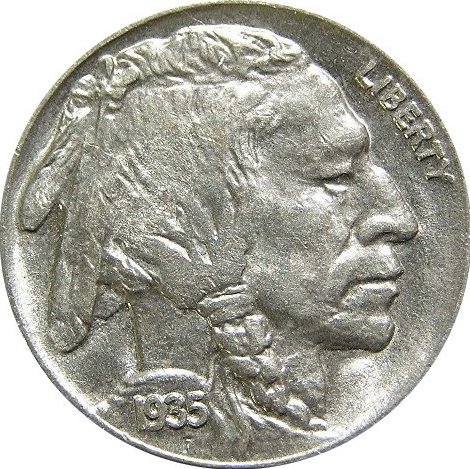
Buffalo nickels (1913–1938) are design royalty. Liberty Head (“V”) nickels look Victorian. Early Jeffersons still feel mid-century American. None of that automatically means scarce. Rarity is mintage + mint + condition, not how cool the reverse looks on TikTok.
Buffalo nickels
These are the coins people pull from estate boxes and assume are “really rare.” Truth:
- Many dates and mints exist in large numbers in Good–Very Good with the date weak or partial — a common condition problem on this series
- Weak or missing dates lower collector demand even when the buffalo is still visible
- A few date/mint combinations are legitimately tougher; most are not
- Problem coins (harsh cleaning, big scratches, holes) are bulk or jewelry-adjacent, not showcase pieces
Design history is worth reading on its own: Buffalo nickels and Standing Liberty quarters. History is not a bid sheet.
Liberty Head (V) nickels
1883–1912 nickels feel ancient to people who only know Jeffersons. Circulated common dates are still a collector series, not a lottery ticket. As always, a few keys and the famous 1913 story dominate headlines; your average V nickel from a junk drawer is average for a reason.
Jefferson nickels (1938–present)
War nickels (1942–1945 with large mint mark above Monticello) have a silver alloy — that is melt/collector hybrid interest, not “age magic.” Most other Jeffersons are modern circulating coinage. Proofs, full steps specialists, and a few semi-keys are hobby niches. Pocket-change Jeffersons are almost never a shop-visit emergency.
How to sort nickels without fooling yourself
- Separate Buffalos, V nickels, war nickels, and modern Jeffersons
- On Buffalos, check whether a full date is readable before you call it a key
- Note mint marks; same year can be common at one mint and better at another
- Bag worn common Buffalos and V nickels as bulk collector — not as individual $50 hopes
- Use a real counter for anything that still looks like a published key after you check mintage lists
If an app told you every Buffalo is hundreds of dollars, reread why coin apps lie and why the offer was lower than you expected.
Why Buffalo dates disappear (and why that is not always “rare”)
Buffalo nickels are famous for weak dates. Dirt, wear, and the original design put the date in a high spot that grinds off in circulation. A dateless Buffalo is a type coin with limited collector demand — interesting on a keychain, not a key date. Re-engraved or “tooled” fake dates are a known problem; shops watch for them. A weak original date is better than a sharpened fake one.
War nickels vs “silver nickels” myths
1942–1945 silver-composition Jeffersons have a large mint mark above Monticello. That mark is your friend. Ordinary nickels are copper-nickel; they are not “secret silver.” If a video told you every old nickel is silver, it was wrong. Melt math only applies when the alloy actually contains silver — same discipline as troy ounces and purity.
Building a type set vs chasing lottery dates
Buffalos and V nickels make excellent type coins — one nice example for the design. Type collecting rewards eye appeal and originality more than fantasy key status. If your goal is a beautiful Buffalo for the album, buy quality openly. If your goal is “this estate nickel will fund a car,” re-read old is not rare before you get attached.
This series: age vs rarity
Read the whole set — each piece cross-links the others:
- Old is not rare — mintage, mint mark, and condition (the rules)
- Cents — Indian Heads, wheat cents, modern Lincolns
- Nickels — Buffalo, Liberty Head, Jefferson
- Dimes & quarters — Mercury, Barber, Standing Liberty, Washington
- Halves & dollars — Walking Liberty, Franklin, Morgan, Peace
- Ancient & world coins — 1,000+ years old and still a few dollars
Related guides in our library
- Why coin value apps and Google “worth” searches lie
- The Red Book is not a dealer buy-price guide
- Why the coin shop offered less than you expected
- Knowing what you have before you walk in
- Understanding coin and bullion pricing at a shop
- Tiny gold coins, use gold, and 10k/14k novelties
- All visitor & collector guides
- Find a dealer: CDXList.com · NumisQ Shops
Pull list (no prices): Buffalo nickel key dates. Location: mint mark under FIVE CENTS.