
← Back to articles · Hobby & visiting shops ·
Where coins began: Lydia, weight, and the first stamps
The first coins were stamped lumps of mixed gold and silver in ancient Lydia, around the 7th century BC. The stamp was a promise about weight and authority. That idea is still on every Eagle.
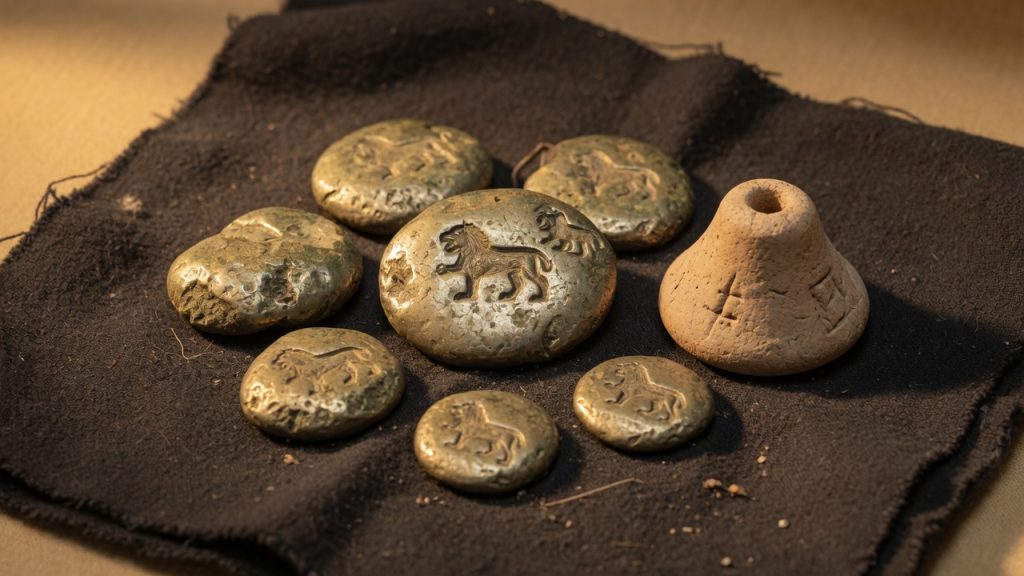
Coins did not start in Philadelphia. They started as a solution to a weighing problem.
If you pay in raw metal, every deal needs a scale. If a trusted authority stamps a lump and says “this is a set weight,” you can count instead of weigh — until someone fakes the stamp.
Lydia and electrum
Most historians point to Lydia (in today’s Turkey) in the 600s BC. The early pieces were electrum — a natural mix of gold and silver — with a punch or design. Greek cities, then Persia, then Rome, turned that into a full system of denominations.
The important invention was not roundness. It was a mark that stood in for a test.
Why this still matters at a counter
A modern Eagle is the same idea with better metallurgy: a government stamp, a known weight, a known fineness. A generic round is closer to the old world — metal plus a private mark. Government vs generic. What a mint is.
Rome debased its silver. Medieval kings clipped coins. People put ridges on edges to make clipping obvious. Why coins have ridges. The shop’s scale is the ancient problem, still unsolved for anything without a trusted stamp.
What to read next
What money is. What seigniorage is. Colonial American coins. Early US federal coinage.
Continue in the coin and money library. Related visitor guides: for shop visitors.