
← Back to articles · Hobby & visiting shops ·
Why coins have ridges on the edge
Reeding was added so people could not shave gold and silver off the edge and pass the coin at full value. Clad coins kept the ridges as habit and as a way to tell dimes from nickels by feel.
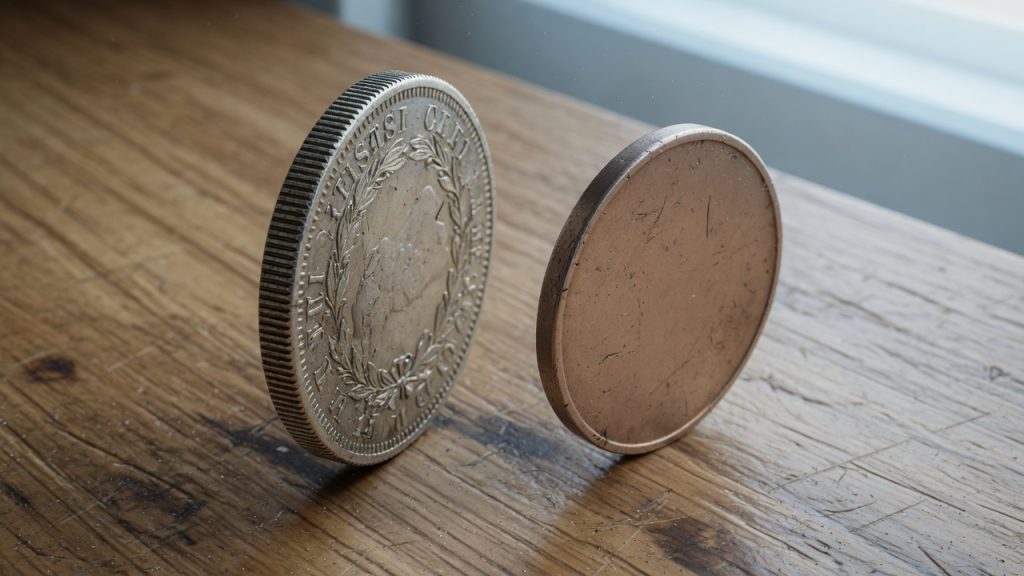
The ridges on a dime or quarter are called reeding.
They were not added for decoration. They were added because people used to clip precious-metal coins — shave a little gold or silver off the edge, spend the coin as if it were whole, and melt the shavings.
A reeded edge shows tampering. Isaac Newton’s mint in England is the famous early modern example of making this standard. The United States followed.
Why clad coins still have them
Modern dimes and quarters are not silver. The ridges stayed because people already knew a dime by feel, vending machines were built around that edge, and nickels and cents stayed smooth. The edge still sorts denominations in a pocket.
Why 1965 changed pocket change. What a mint is. Where coins began.
What a shop looks for
A worn-smooth old silver coin is usually wear. A fresh coin with a filed edge is a problem. Some bullion uses lettered edges instead. None of this replaces a scale. Authenticity checks.
Continue in the coin and money library. Related visitor guides: for shop visitors.
Extra pad history for why coins have ridges
The ridges on a dime or quarter are called reeding. They were not added for decoration. They were added because people used to clip precious-metal coins — shave a little gold or silver off the edge, spend the coin as if it were whole, and melt the shavings. A reeded edge shows tampering. Isaac Newton’s mint in England is the famous early modern example of making this standard. The United States followed.
Modern dimes and quarters are not silver. The ridges stayed because people already knew a dime by feel, vending machines were built around that edge, and nickels and cents stayed smooth. The edge still sorts denominations in a pocket. Why 1965 changed pocket change. What a mint is.
What a shop looks for
A worn-smooth old silver coin is usually wear. A fresh coin with a filed edge is a problem. Some bullion uses lettered edges instead. None of this replaces a scale. Authenticity. Counterfeits of bars are a different cheat. Clipping was the old cheat.
US 90% through 1964 is reeded for the old reason and still silver. Clad after 1965 is reeded for habit. War nickels 1942–45 are 35% silver and have a large mint mark on the reverse, not a special edge. Do not file an edge at home to “see the copper.” You will make a details coin. Don’t clean.
People also ask
Why don’t nickels have ridges? Different denomination, different tradition. Smooth.
Does a smooth-edge dime mean fake? On a new dime, maybe. On a worn Barber, maybe wear. We look.
Did reeding stop all clipping? It made clipping obvious. Scales still matter.
Do Gold Eagles have reeds? Yes. Edge details are part of the spec we check.