
← Back to articles · Hobby & visiting shops ·
Dimes and quarters: old silver looks rich — mintage still rules
Mercury dimes, Barber coinage, Standing Liberty quarters, and early Washingtons are often silver and often common. Melt is not the same as rarity.
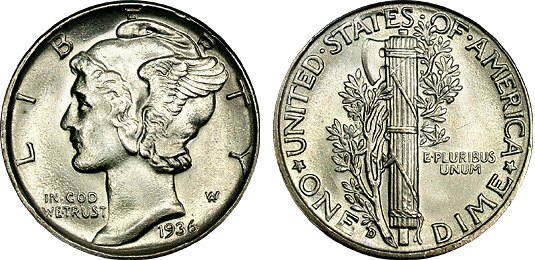
Silver edges and old designs convince people they found a numismatic jackpot. Sometimes they found melt value. Sometimes they found a common collector type coin. Rarely, they found a key date/mint in strong condition. You cannot tell which from age alone — see old is not rare.
Silver vs rare (do not mix them up)
U.S. dimes and quarters dated 1964 and earlier are 90% silver (with a few special cases). That gives them melt value tied to the silver market. Melt is real money. Melt is not “this is a rare coin.” A worn 1964-D quarter and a worn 1940-S Mercury dime can both be primarily silver math until a key date or high grade enters the chat. Background: junk silver explained.
Mercury (Winged Liberty) dimes
1916–1945. Beautiful, popular, heavily collected — and for many dates, heavily minted. Common Mercuries in circulated grades are a staple bulk silver/collector mix. A few dates and mint marks are tougher; micro-S and other specialty topics are for people who already know how to read a mintage table. Your jar of readable Mercuries is usually a good silver day, not a museum donation.
Barber dimes and quarters
Barber design coinage feels “really old” because it is late 19th / early 20th century. Circulated common dates still exist in quantity. Keys exist. Condition problems (harsh cleaning was popular for generations) are everywhere. Age got them into the conversation; date, mint, and grade finish it.
Standing Liberty quarters
Iconic art. Weak strikes and date wear are common. Some issues are scarce; many are available worn. Design story: Buffalo nickels and Standing Liberty quarters. When you sell, expect the shop to care about full dates, mint marks, and problems before they care about “it is from World War I.”
Washington quarters
1932 onward. Early silver Washingtons are often melt-plus-modest-collector. Clad quarters after 1964 are face value with rare exceptions (certain varieties, proofs, errors). A 1970s clad quarter is not valuable because it is “almost 50 years old.” Fifty years is nothing in coin time — and mintages were enormous.
Sorting dimes and quarters for a shop visit
- Pull 1964-and-earlier silver into one bag (melt baseline)
- Pull obvious keys / semi-keys by date+mint into a separate tray
- Leave clad modern as face value unless you already know a variety
- Do not clean silver “to make it shine” — you can destroy premium
- Ask the shop to quote silver weight and any numismatic picks separately so you understand both numbers
Online asks for perfect Mercuries do not price your scratched bulk lot. Apps and Google “worth” results blur that on purpose.
Clad vs silver at a glance
A quick physical check helps before you visit:
- 90% silver dimes/quarters (1964 and earlier for most issues) have a solid silver-colored edge
- Clad coins show a copper stripe on the edge
- Weight differs slightly; shops confirm with a scale when it matters
That edge test alone saves arguments. It does not tell you if a Mercury is a key date — it tells you whether melt is even in the conversation. Full rarity still needs date, mint, and grade.
Standing Liberty and “full head” talk
Advanced collectors pay for strike details (for example full head on some Standing Liberty quarters). That is a specialist premium on top of an already identified date/mint. It is not a reason to price every worn Standing Liberty like an auction showcase. If you do not already know the variety, do not invent it from a phone zoom.
Why 1964 feels magical and usually is not
1964 is the last year of 90% silver circulating dimes and quarters for the standard series. People treat the date like a talisman. Melt-wise, it is silver. Rarity-wise, 1964 was a huge mintage year at multiple mints. Special is the metal content and the historical cutoff — not “few were made.” Parallel lesson for halves and dollars: age vs mintage on big silver.
This series: age vs rarity
Read the whole set — each piece cross-links the others:
- Old is not rare — mintage, mint mark, and condition (the rules)
- Cents — Indian Heads, wheat cents, modern Lincolns
- Nickels — Buffalo, Liberty Head, Jefferson
- Dimes & quarters — Mercury, Barber, Standing Liberty, Washington
- Halves & dollars — Walking Liberty, Franklin, Morgan, Peace
- Ancient & world coins — 1,000+ years old and still a few dollars
Related guides in our library
- Why coin value apps and Google “worth” searches lie
- The Red Book is not a dealer buy-price guide
- Why the coin shop offered less than you expected
- Knowing what you have before you walk in
- Understanding coin and bullion pricing at a shop
- Tiny gold coins, use gold, and 10k/14k novelties
- All visitor & collector guides
- Find a dealer: CDXList.com · NumisQ Shops