
← Back to articles · Coin Dealer information ·
Assay, weight, and “is this real?” — how authenticity checks work at a shop
Magnets, scales, calipers, sigma-style tools, XRF, and common sense — what a counter actually does when something looks wrong.
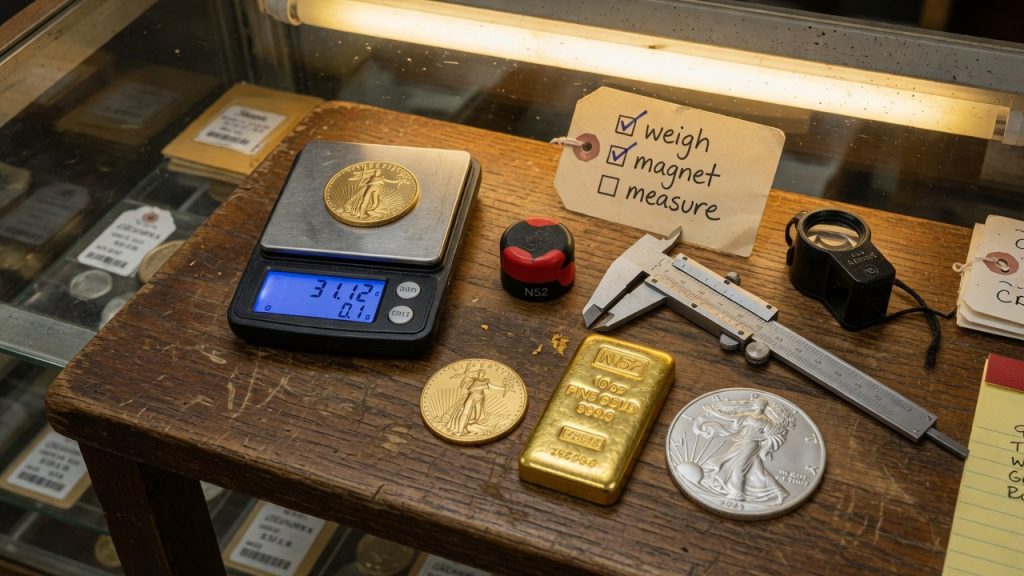
Authenticity is not one gadget. It is a stack of cheap tests, expensive tests, and pattern recognition. Here is what “we need to check this” means without mystique.
First line
Weight, diameter, thickness, magnetism, reeding, design details under magnification, and comparison to known genuine examples.
Instrument line
Conductivity/frequency instruments, XRF for alloy fingerprints on appropriate pieces, and third-party grading for high-stakes coins.
Why shops decline sometimes
If risk is high and upside is low, the correct business answer is “no.” That protects the shop and, honestly, protects you from a bad chain of title later.
For customers
Buy boring brand-name bullion from boring reputable places. Bring inheritance surprises in early, not after polishing.
Educational history and product guidance — not legal, tax, or investment advice. Laws and policies change; verify current rules for your situation. Images used for education are public-domain or freely licensed historical references where sourced from open repositories.
What you can do at home first
- Weigh against published specs
- Magnet test where appropriate (steel cents stick; gold should not)
- Look for seams, wrong fonts, mushy details
- Compare diameter with a known genuine piece
- Stop if anything feels off — pay for a professional check on expensive items
Weight, magnet, and a test in front of you. How to avoid fakes. A 1943 cent that sticks is steel. A war nickel does not stick and is 35% silver. 1943 steel. Jefferson / war nickels. We do not guess from color alone.