
← Back to articles · Hobby & visiting shops ·
Why Liberty is on United States coins
Liberty is not a portrait of one woman. She is the idea the Mint was told to put on the money: a personification, a cap, a walking figure, a seated figure.
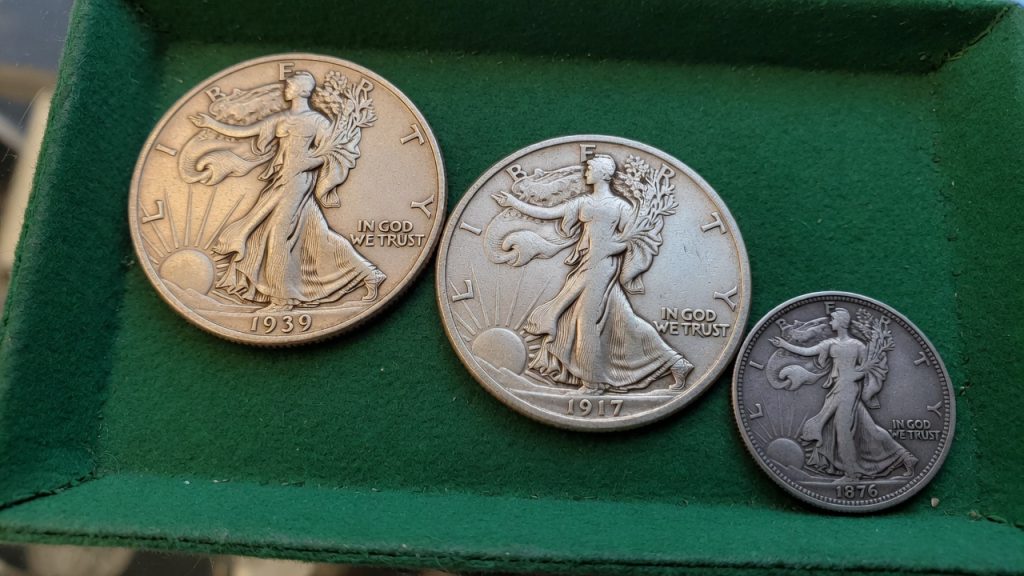
Liberty on a US coin is usually not a specific woman. She is a personification — the same way a statue on a courthouse is not a portrait of the clerk.
The Mint was told, early, that the coins should show liberty. Artists then spent two centuries arguing about her hair, her hat, and whether she should sit, walk, or stand. How designs get chosen.
The versions in the drawer
- Seated Liberty sits with a shield and a pole. Silver, late 1830s to 1891. Seated Liberty.
- Walking Liberty walks toward a sunrise with branches. Half dollars, 1916–1947. The modern Silver Eagle borrowed her. Walkers. Silver Eagle.
- Standing Liberty stands with a shield and an olive branch. Quarters, 1916–1930. The 1916 is the key. Standing Liberty. 1916.
- Morgan’s Liberty is a profile with a cap and cotton. Dollars, 1878–1921. Morgan vs Peace.
A Phrygian cap on some earlier types is a freedman’s cap from older European art. It is not a secret society mark. Initials that are not codes.
What this is not
It is not a portrait of a First Lady. It is not a promise the coin is rare. A common Walker with Liberty walking is still 90% silver unless the date is a date. Old is not rare.
The mottoes around her are a separate story. E Pluribus Unum and In God We Trust.
More on the coin and money library.