
← Back to articles · Hobby & visiting shops ·
Mercury dime key dates cheat sheet (no prices)
Sort a pile of Mercury dimes by date and mint, not by age. 1916-D is the key. 1921 and 1921-D, plus the 1942/1 overdates, are the other pulls. Full bands is a grade, not a date. This is not a price list.
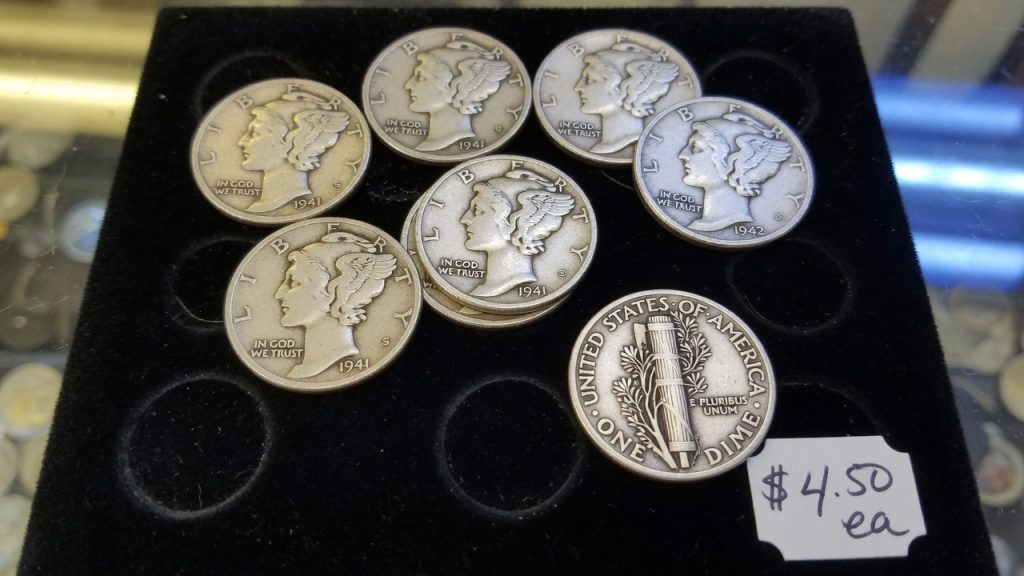
Use this to sort a pile, not to name a retirement. Most Mercury dimes are 90% junk. A short list of date + mint deserves a second look. Old is not rare.
This is a sorting aid, not a price list. We do not publish dollar values here.
Mint mark first
On the reverse, left of the fasces, near the bottom. No letter is Philadelphia. D = Denver. S = San Francisco. Where is the mint mark?
Pull these
- 1916-D — the key. Fakes and added mint marks exist.
- 1921 and 1921-D
- 1942/1 and 1942/1-D overdates
- 1916-S — better than a 1944, not a 1916-D
- High-grade full bands examples of common dates — only if the bands are truly split
Usually junk silver
1940–1945 P and D Mercuries in worn grades. A 1943-S is not a key. Weigh the pile. 90% silver.
People also ask
Is 1945 Micro S a key? A variety. Not a 1916-D.
Did they make Mercuries in 1946? No. Roosevelt starts 1946.
Continue in the coin and money library. Related visitor guides: for shop visitors.
How we actually dump a jar
Flip every reverse, read the mint mark, then the date. 1916 with a D comes out first. 1921 any mint comes out. 1942 we tilt for the overdate. Everything 1940–45 worn goes in the junk tub.
Full bands only matters on coins that still have mint luster. Do not pay yourself a full-bands premium on a Good-4 Mercury. Mercury dimes. 90% silver.
Faked 1916-D mint marks are a real thing. A mushy D or a D that sits wrong is not a key until it survives a loupe.