
← Back to articles · Hobby & visiting shops ·
1943 steel cents: the magnet test, the rust, and the copper story
In 1943 the Mint made Lincoln cents on zinc-coated steel to save copper. A magnet sticks. Most are common and often rusty. A 1943 copper cent is a famous rarity and a famous fake.
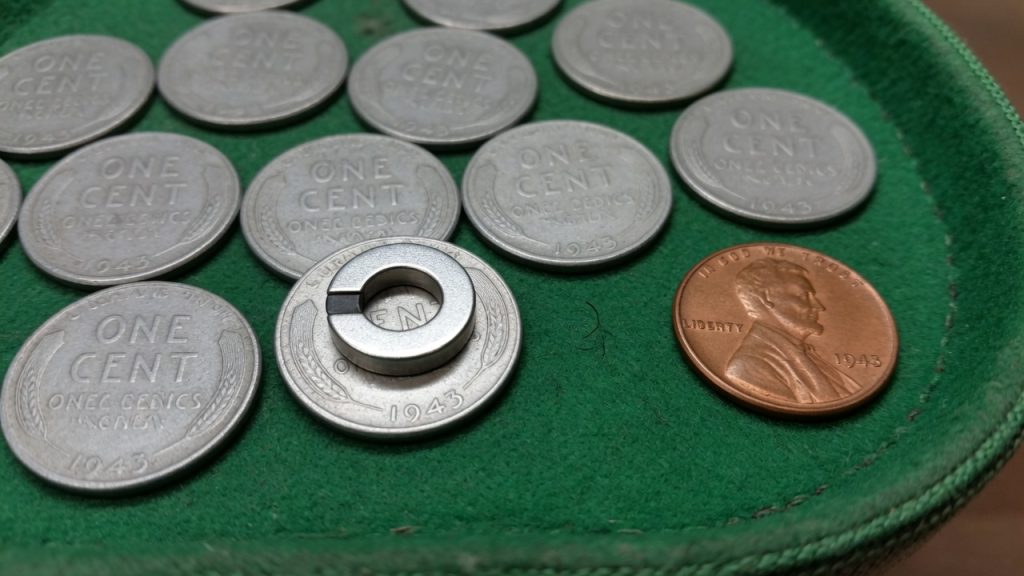
In 1943 the Mint needed copper for the war. Cents that year were zinc-coated steel. They are gray. A magnet sticks. That is the whole identification.
Most 1943 steel cents are common. They rust if they get damp. A rusty one is still a steel cent. It is not a key date. Wheat key dates. Old wheat pennies.
The copper story
A 1943 copper cent — struck on a leftover bronze planchet — is a real rarity. A handful are confirmed. People copper-plate steel cents and try to sell them as that coin. The magnet still sticks to plated steel. A real 1943 copper does not stick. We will still weigh it and look at the date. Do not buy one off a Facebook ad. Error-coin hype. How shops check authenticity.
1944 steel cents exist too (leftover steel planchets). Also scarce. Also faked.
What a shop pays
A handful of steel cents: a few cents each, or we toss them in the wheat bin. A roll: still cheap unless you have a copper that survives the magnet and the scale. Do not clean the rust off with acid. You will make a worse coin. Don’t clean.
Bring the copper-looking 1943 in a flip, not loose. We will do the magnet in front of you.
Part of the coin and money library · visitors & collectors
Why they rust
Steel rusts. Zinc is a thin coat. A jar in a damp basement will pit. That is chemistry, not a mint error. A bright reprocessed steel cent (tumbled and recoated) shows up in old ads. We will say if it looks reprocessed.
People also ask
Are all 1943 pennies steel? That was the plan. Copper ones are the accident.
Does a magnet ruin the coin? No. Use a fridge magnet for one second.
Is a rusty steel cent worthless? Almost. It is still a common 1943.
What about 1943-D and 1943-S? Same steel, same story, same magnet.
Steel cents are not copper melt. Copper Lincolns: wheat. 1982 split: 1982 penny.