
← Back to articles · Hobby & visiting shops ·
Visiting a coin shop for the first time: what to expect
A plain-English walkthrough of walking into a real coin and bullion shop — layout, counter etiquette, and how the buy/sell conversation actually works.
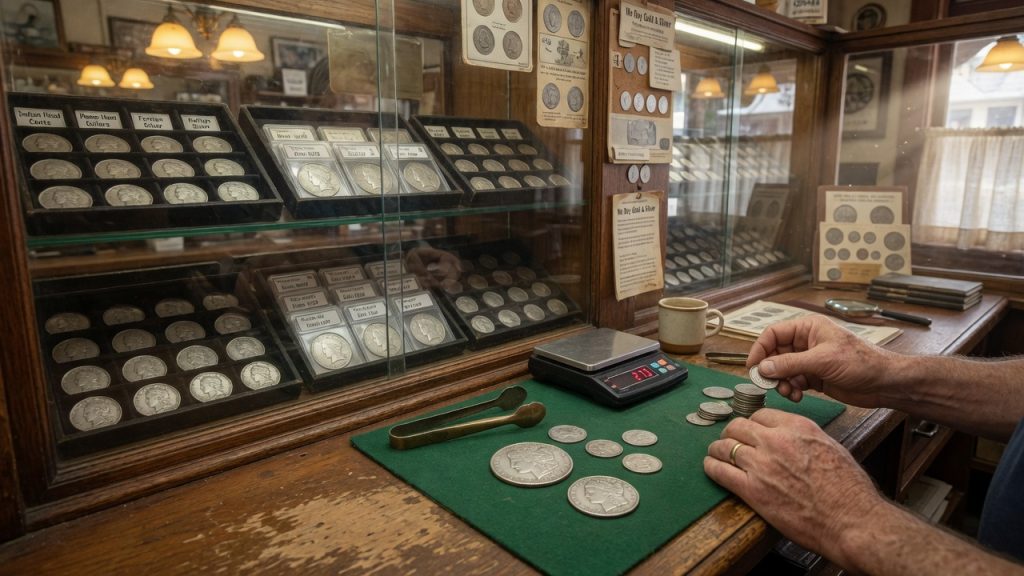
If you have never walked into a coin shop, it can feel a little like walking into a hardware store for the first time when you only know home-improvement YouTube. There is a rhythm to the place. Nobody is trying to trick you, but nobody is going to re-teach the entire hobby in five minutes either. This is what a normal visit looks like in a brick-and-mortar shop that buys and sells coins, bullion, and scrap.
What you will usually see
Most shops have a public area with cases of coins, currency, and maybe jewelry or scrap gold trays. There is a counter with a scale, a computer, and often a TV or board showing live gold and silver prices. Behind the glass you will see staff who are doing three jobs at once: helping a buyer look at a silver eagle, writing up a gold buy, and answering the phone about “what’s an 1889-O Morgan worth.”
That is normal. Coin shops are small businesses. Peak times (lunch, after work, Saturday morning, the week after a big spot move) get busy. If someone is deep in a multi-hundred-dollar buy, wait your turn. Cutting in line is the fastest way to start on the wrong foot.
Buying vs selling — say which you want
When it is your turn, lead with the simple version: “I’m looking to buy some silver,” or “I have some coins I’d like a buy offer on.” Those are different workflows. Buying from the case is retail. Selling to the shop is wholesale from the shop’s point of view — they have to leave room to resell, pay staff, cover rent, and take risk on authenticity and market moves.
If you only want an education and are not ready to sell, say that too. A good shop will still talk with you. A bad shop will rush you. Most of us would rather spend three honest minutes than twenty awkward ones where everyone is pretending a deal is about to happen.
What “looking at your coins” means
When you sell, staff will usually:
- Ask you to empty the bag or box onto a tray (they do not want surprises mixed in with residue or trash)
- Sort common bullion from numismatic coins from jewelry/scrap
- Weigh melt-related material and check for plating or tungsten fakes on high-risk pieces
- Look up or estimate retail resale for anything with collector premium
- Give you a total cash (or check/ACH) offer — not a Red Book tour of every date
You can ask questions. You can say no. You can take the coins back and think about it. What you should not do is argue that a video told you the shop “has to” pay retail. They do not. They are a store, not an auction house with free money.
IDs, paperwork, and why shops ask
Many states require ID and a record for purchases of certain metals or secondhand goods. Shops also protect themselves against stolen property. If that feels invasive, remember: the same rules exist because other people already tried to abuse the system. Bring a government ID if you plan to sell. Expect a receipt. Keep it.
How long it takes
A simple silver eagle sale or a scrap gold chain can be minutes. A coffee can of mixed wheat cents, foreign junk, and broken jewelry can take a while. If you have a large lot, call ahead. Some shops will schedule a quiet slot so you are not standing at the counter for forty-five minutes while Saturday foot traffic piles up.
What a good first visit feels like
You leave understanding what sold, what did not, and why — even if the number is lower than social media promised. You were treated like an adult. Nobody mocked your coins. Nobody lowballed you without an explanation you could follow. That is the baseline. Everything else (coffee, jokes, free storage tips) is gravy.
Next reads: coin shop etiquette, why the Red Book is not a dealer buy list, and how to read online reviews of coin shops.