
← Back to articles · Coin Dealer information ·
How to read coin shop reviews (and spot the uneducated ones)
Why one-star reviews often mean “my YouTube price was wrong,” how to tell a real customer complaint from an engagement-bait hangover, and what signals actually matter.
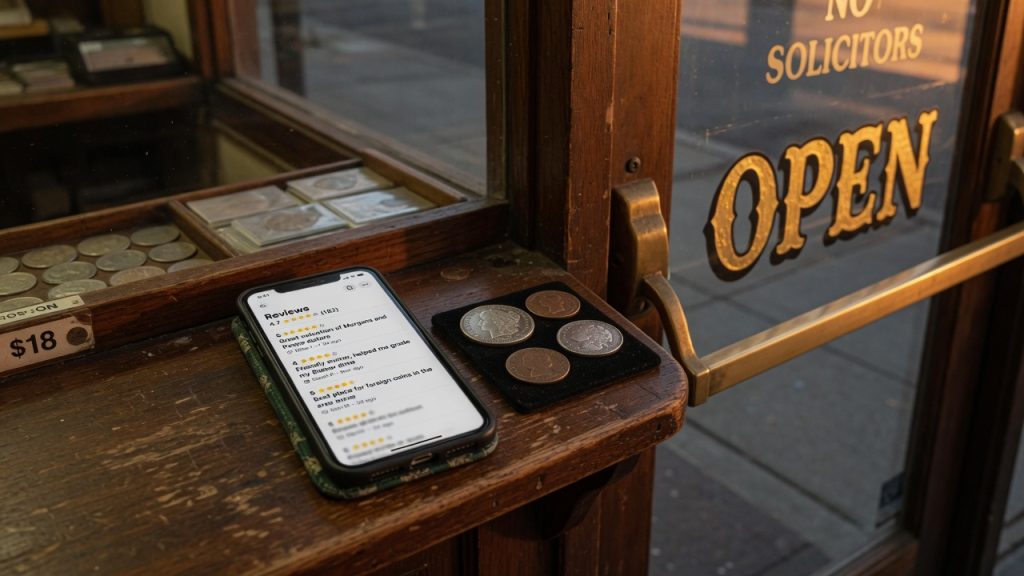
Before people drive to a coin shop, they read Google reviews. That is smart. It is also easy to get fooled. The hobby has a loud corner of the internet that teaches viewers that every silver dime is a lottery ticket and every dealer who pays melt-plus-a-little is a crook. Then those viewers walk into a real shop, hear a real number, and type a one-star review on their phone in the parking lot.
Some bad reviews are deserved. Some shops are rude, dishonest, or sloppy. This article is about the other pile — the reviews written by people who were never going to like any legitimate wholesale offer because a video already sold them a fantasy.
Patterns of an “I watched too many hype videos” review
Watch for language like:
- “They tried to steal my coins” with no detail on dates, condition, or what competing shops offered
- “Offered me pennies on the dollar vs Red Book / PCGS price guide / eBay sold listings of perfect slabs”
- “I know what I have” repeated as if confidence grades coins
- Claims of “rare error” on a coin that is clearly post-mint damage
- Anger that the shop would not pay retail for bulk common silver or modern bullion
- One visit, huge accusation, zero photos, zero second opinion
None of those prove the shop is honest. They do prove the reviewer may not understand the difference between retail ask, auction results for premium pieces, and a same-day cash bid on raw material.
What a useful critical review looks like
A review that helps other customers usually includes:
- What they brought (in general terms) and what they were trying to do — buy or sell
- How they were treated — rushed, explained, ignored, pressured
- Whether the quote was explained in plain English
- Whether the receipt matched the conversation
- Whether the shop honored posted hours, licenses, and basic professionalism
- A comparison if they got other bids (“two other shops were within X%”)
“They were $2 under the other place on eagles but explained premiums and I still felt respected” is gold for a future customer. “Thieves!!!!” with no facts is noise.
Engagement videos are not market makers
Short-form video rewards shock. “Dealers hate this one trick” and “this coin in your change is worth thousands” keep people watching. They do not keep people accurate. A creator who never has to inventory your specific coin, never has to wire payroll, and never has to eat a fake gold bar can afford to sound braver than the person with a scale and a state license.
If a review’s emotional temperature matches a hype thumbnail more than a receipt, discount it. Hard.
How shops sometimes earn real one-stars
Do not swing the other way and assume every complaint is a clown. Legitimate problems include bait-and-switch, refusing to return coins, pressure tactics, rude staff, dirty grading lies, or quotes that change after the customer is already committed. Patterns across many detailed reviews matter more than one nuclear post.
A simple way to use reviews well
- Read the 3-star and 4-star reviews first — they are often the most human
- Look for staff names and long-term customers who mention fair buys over years
- Ignore pure rage with no inventory details
- Call the shop and ask how they price common silver and scrap — tone on the phone is data too
- Get more than one offer on anything important
A one-star review that means “they would not pay collector retail for my common raw coins” is not the same as “they stole from me.” Learn to tell those sentences apart and you will pick better shops — and write fairer reviews yourself.
Background that prevents review-rage: Red Book reality and counter etiquette.