
← Back to articles · Hobby & visiting shops ·
Canadian silver at a US shop: it is 80%, not 90%
Canadian dimes, quarters, halves, and dollars from 1920 through 1966 are 80% silver. 1967–1968 drop to 50%, then nickel. Do not pay US junk-silver math on a Canadian quarter.
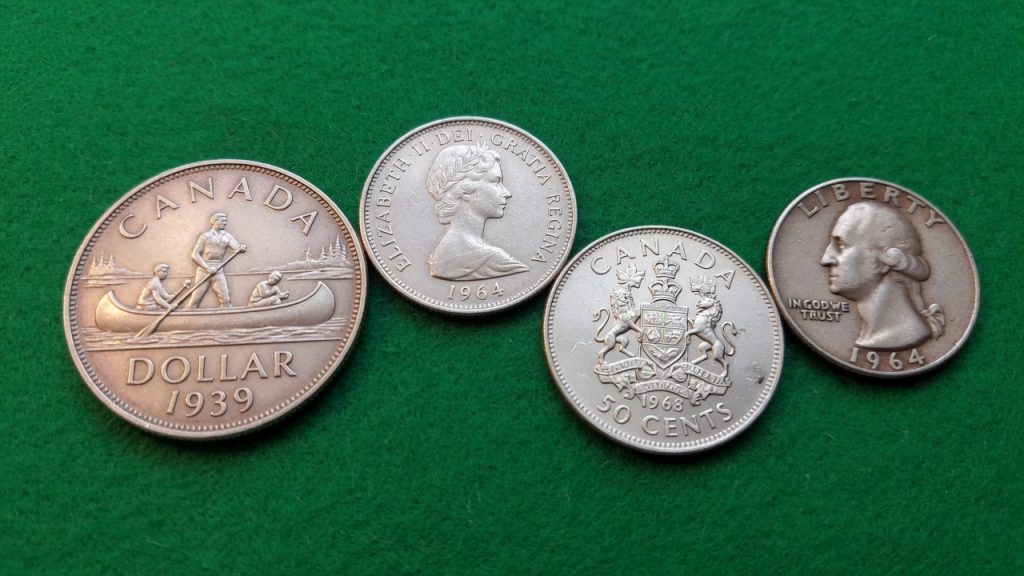
US junk silver is 90% through 1964. Canadian circulating silver from 1920 through 1966 is 80%. That is the sentence that saves an argument.
1967 (the goose, the lynx, the wolf — the centennial year) started at 80% and switched to 50% on dimes and quarters mid-year. 1968 is 50% for a while, then nickel. After that, no silver in the change. 90% vs 40% vs war nickels. Fineness.
Before 1920 a lot of Canadian silver is sterling (.925). Different pile again.
What we see
Voyageur dollars (1935–1967), 80% halves and quarters, 1964–66 tourist leftovers next to US 1964. People count them like US junk. We re-count at 80% or 50%. A Canadian 1964 quarter is not a 1964 Washington.
Commemorative dollars and later Maple Leafs are a different product. Maples are bullion. These are circulating silver.
What a shop pays
Weigh. Apply the right fineness. Problem-free dollars can add a little over melt. Cleaned or damaged: melt. Don’t clean. World coins.
If the same bag has US 1964 and Canadian 1964, make two stacks before anyone quotes a number.
Continue in the coin and money library. Related visitor guides: for shop visitors.
The 1967 pictures
Centennial year: dove, rabbit, lynx, mackerel, wolf, goose, and a $1 Canada goose voyageur variant. Pretty. Still 80% or 50% by denomination and strike date. The picture does not change the fineness.
Newfoundland coins before it joined Canada (1949) are another small silver pile. We will pull those if they are in the bag.
People also ask
Can I use the same junk multiplier as US 90%? No.
Are 1968 quarters silver? Some early 1968 are 50%. Later 1968 are nickel. We test.
What about Canadian gold sovereigns? Different product. Sovereigns.
Canadian circulating silver is usually 80%, not US 90%. Search Maple or Canadian silver on Melt Prices.