
← Back to articles · Hobby & visiting shops ·
Mint errors vs die varieties
A variety is on the die and can repeat. An error happened at the press or to the planchet. Most “errors” in a junk drawer are damage. Doubled dies are not machine doubling.
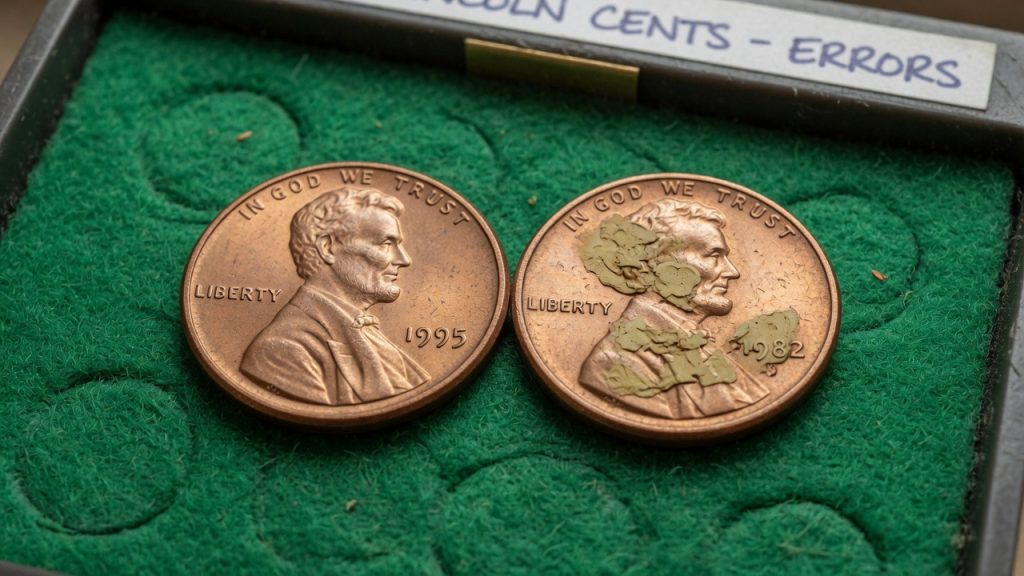
Two different things get called “errors.”
A die variety lives on the die. Doubled die. Repunched mint mark. Die crack that collectors named. Every coin from that die can show it. How a die works.
A mint error is a mistake in that strike or that planchet: off-center, broadstrike, wrong planchet, clipped planchet, filled die. It does not have to repeat.
Damage is after the mint: a vise, a lawn mower, a kid with a hammer. That is not a mint error.
Doubled die vs machine doubling
Doubled die is a second image from the hub. It has a shelf. Dates and mottoes can show it. Famous ones are listed (1955 doubled-die cent is the poster).
Machine doubling is the die bouncing. It looks flat and shelf-less. It is common. It is not a doubled die. Phone groups mix them up every day. Error hype. Loupe.
What a shop pays
Listed varieties on collected dates: we look. We do not invent a new one at the glass.
True mint errors: some are money, most are a few dollars of curiosity. A 1943 copper cent is a different conversation than a grease-filled letter on a 1990s memorial.
Damage: face, or melt if it is silver or gold. Old is not rare.
Continue in the coin and money library. Related visitor guides: for shop visitors.