
← Back to articles · Hobby & visiting shops ·
Don’t clean the coins. That is how you turn money into metal.
Heirs polish. YouTube dips. Toothpaste happens. Collector value lives in original surfaces. Cleaning is the fastest way to turn a coin into scrap that still looks shiny.
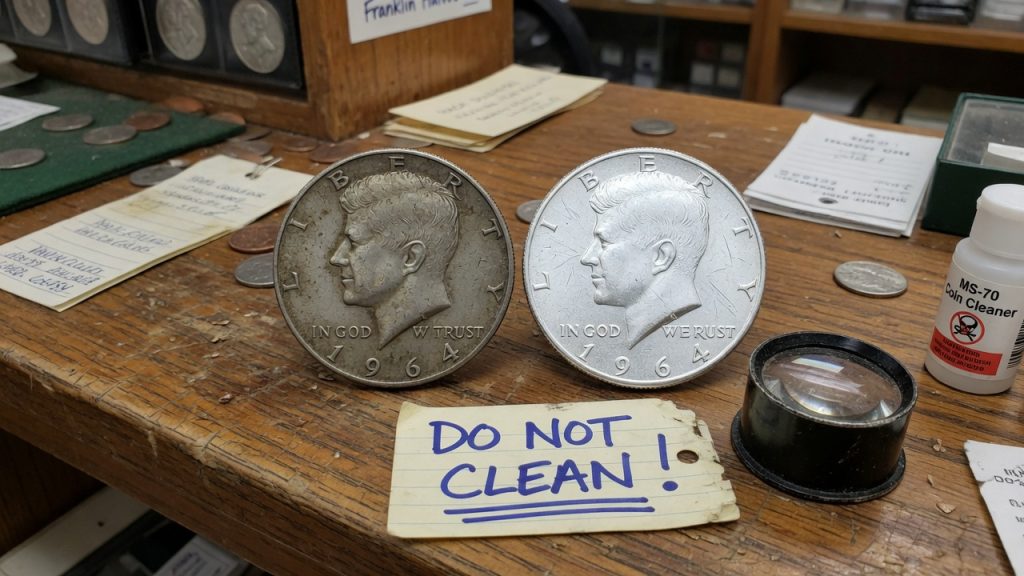
If you only remember one thing from this site, make it this:
Do not clean the coins.
Not with toothpaste. Not with a pencil eraser. Not with ketchup, Coke, baking soda, a Dremel, a jewelry cloth, or that “coin dip” a guy on a video swore by. Not even with a soft cloth and good intentions. If they came out of a drawer looking like 1962, leave 1962 on them.
Why people clean them anyway
Because dirty feels like “not taken care of,” and shiny feels like “worth more.” That is how a kitchen works. It is the opposite of how collector coins work.
A collector is buying original surfaces — the skin the mint put there, plus whatever honest wear the coin earned in the world. Toning can be ugly or it can be beautiful. Hairlines from a polish cloth are just damage. Once those lines are there, they are there. You cannot un-wipe a coin.
What a shop sees in two seconds
We tilt it under a light. Cleaned coins flash wrong. The fields look slick or smeary. The high points are bright in a way wear never is. Sometimes you can still smell the dip. Sometimes there is a haze in the letters that says “someone helped.”
Then the bid drops. Not because we are punishing you. Because the next collector will punish us if we pretend it is original. A cleaned key date is often just expensive scrap with a story.
If the offer already felt low and you cleaned them last night so they would “show better,” that is the whole movie. Related: why the shop offered less than you expected.
The heir problem
This happens every week. Someone inherits a coffee can. They love the person who saved it. They want the coins to look respected, so they spend Saturday at the sink. They bring us a pile of bright, hairlined, dead coins and a story about how nice they used to look “before they sat in the basement.”
The basement was not the villain. Saturday was.
If you are in that chair right now and you have not touched them yet: stop. Photograph them. Sort them. Do not improve them. The estate guide is here: inheriting coins and precious metals.
What you can do
- Leave dirt that is just dirt. A shop would rather see dust than Brasso.
- Handle by the edges. Do not rub the faces.
- Put them in PVC-free flips or a dry box. Storage that does not eat them: safe storage at home.
- If something is actively rotting — PVC slime, wet cardboard, green crust — put it in a dry place and bring it in. Do not start a chemistry project.
There is such a thing as professional conservation, for a few coins, by people who do that for a living, usually after a grading service is already in the conversation. That is not you at the kitchen table. Those are not the same sentence.
Bullion is a little different — still do not polish it
A common gold eagle that you dropped in a sock drawer is still a gold eagle. Weighs the same. Shops buy those all day with milk spots, bag marks, and fingerprints. You still should not polish it. You just will not usually destroy the melt the way you destroy a collector premium.
That is one more reason simple bullion is easier to leave to other people: the next owner does not have to win an argument about original skin. Weight and purity do the talking. Bullion vs collectible if you want that spelled out.
If you already cleaned them
Bring them anyway. Tell the truth. “I cleaned these last year, I did not know.” That sentence saves ten minutes of pretending and it does not make the number worse. The surfaces already said it.
Do not try to “fix the cleaning” with another pass. You cannot sand a hairline into originality. You can only make it more obvious.
And if a video told you cleaning raises the grade: that person is not writing you a check. We might be. Different incentives.
Apps and “what’s my coin worth” searches have the same problem — they grade a photo in their head, not the coin in your hand: why those numbers lie.
Part of the visitors & collectors library · NumisQ Learn