
← Back to articles · Hobby & visiting shops ·
U.S. fractional currency: why America printed money smaller than a dollar
Civil War coin shortages forced the United States to issue paper notes under one dollar — 3¢ to 50¢ “fractional currency.” How it worked, why it existed, and what collectors look for.
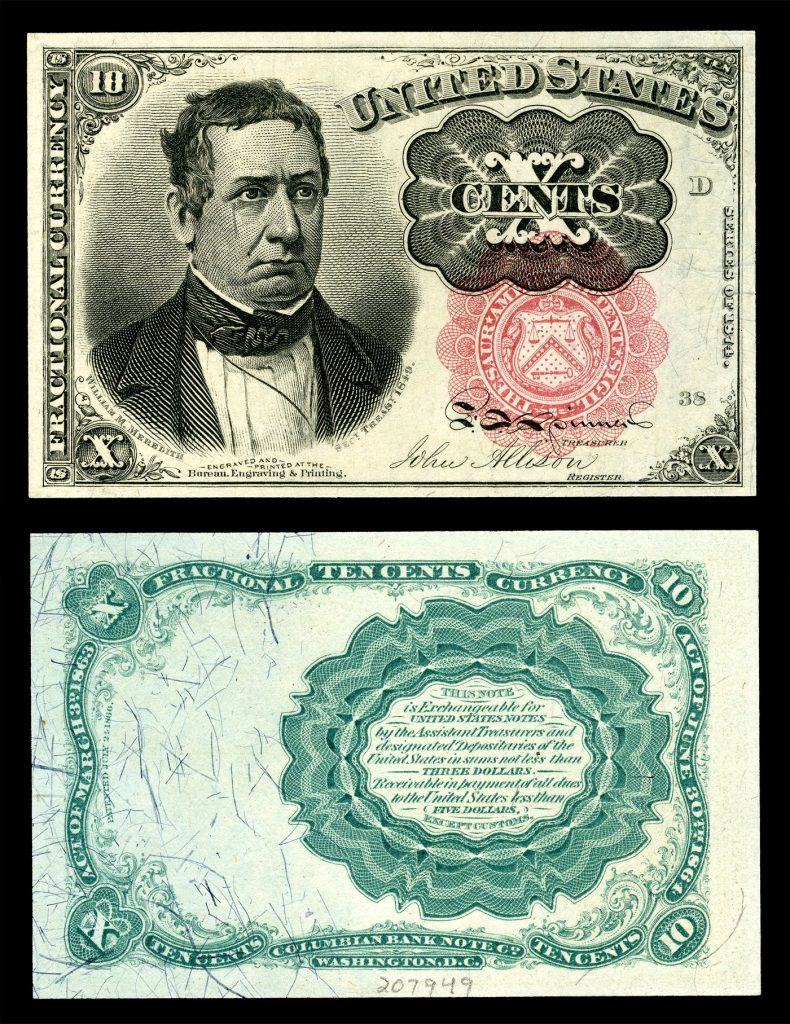
If you have ever wondered why a government would print a three-cent or fifteen-cent note, the answer is not whimsy. It is crisis logistics. During the American Civil War, coins vanished into hoards. People needed small change. The United States responded with fractional currency — paper stand-ins for the silver and copper that would not stay in circulation.
This is one of the most practical stories in U.S. money history: when metal leaves the counter, paper gets invented to replace it.
Coins disappeared — postage and then fractional notes
War uncertainty, dual metal values, and hoarding emptied change drawers. Merchants improvised. Postage stamps circulated in awkward ways; “postal currency” experiments appeared. Congress and the Treasury moved toward formal small-denomination paper.
Fractional currency issues spanned multiple series with changing designs, anti-counterfeiting ideas, and denominations commonly remembered as 3¢, 5¢, 10¢, 15¢, 25¢, and 50¢ depending on issue. Exact catalogs are a collector specialty; the public story is simpler: Washington needed nickels and dimes that were not metal.
Why not just more cents?
Mint capacity, metal supply, and the speed of crisis mattered. Paper could be produced and shipped in ways that solved retail friction faster than waiting for full metallic recovery. Fractional notes were a bridge technology until coinage circulation normalized after the war years.
What they look like and how they fail
These notes are small compared to later “horse blanket” large-size bills. Designs can include Washington portraits, shields, and elaborate engraving for their size. Survival varies; many were heavily used. Condition, series, and variety drive collector premiums. Counterfeits and damaged notes are part of the field.
For estates: do not iron them, tape them, or “clean” them with erasers. Sleeve them and get a paper-money-aware appraisal path if quantities are large.
Connection to later emergency paper
Fractional currency is an ancestor spirit of later emergency overprints and special issues: when ordinary money logistics break, governments print exceptions. See also our articles on WWII emergency notes and Military Payment Certificates.
Educational history and product guidance — not legal, tax, or investment advice. Laws and policies change; verify current rules for your situation. Images used for education are public-domain or freely licensed historical references where sourced from open repositories.
Collecting fractions today
Fractional notes are approachable entry paper for some budgets and deep specialty for others. Focus on intact corners, honest color, and problem-free paper. Trimming and “pressed flat” examples are common pitfalls.