
← Back to articles · Hobby & visiting shops ·
WWII emergency notes: Hawaii overprints and North Africa yellow seals
Why the U.S. printed special Hawaii-overprint notes and yellow-seal North Africa notes in World War II — capture risk, theater logistics, and what survivors mean today.
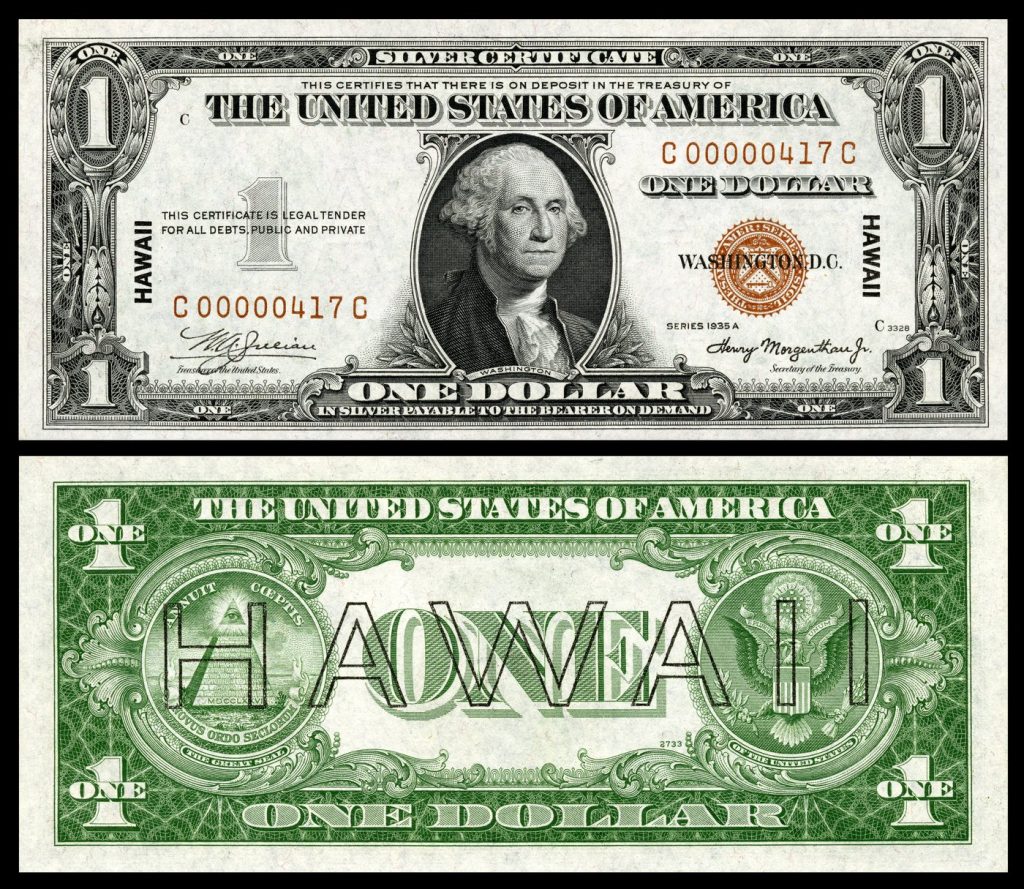
In World War II the United States issued special paper money variants for specific theaters so that, if large amounts were captured, the notes could be isolated from the domestic money supply. Two famous programs collectors meet are Hawaii overprint notes and yellow-seal notes associated with North Africa (and related) use.
These are not “random rare bills.” They are logistical weapons in paper form.
Hawaii overprints
After Pearl Harbor and with invasion fears in the Pacific, authorities overprinted notes used in Hawaii with “HAWAII” as a distinctive marker. If invading forces seized currency stocks, the special notes could be demonetized or rejected more cleanly than ordinary mainland notes mixed into the U.S. money supply.
Surviving Hawaii notes are collectible; condition and denomination matter. Many saw hard use.
North Africa / yellow seal notes
Special yellow treasury seals on certain silver certificates are tied to wartime issue for North African and related operations — again a distinguishability and capture-risk logic rather than a souvenir program. The precise issue and recall stories are documented in paper-money references; the public takeaway is: war made ordinary green-seal assumptions incomplete.
What shops see
Emergency issues walk into shops from estates and old wallets. They are paper-money collectibles, not bullion. Value depends on type, grade, and authenticity — not on melt. Do not wash them. Do not tape edges.
Link to the bigger theme
Emergency notes sit in a family with fractional currency and MPCs: when ordinary monetary plumbing fails political or military tests, governments invent special paper. Understanding that pattern makes you harder to impress with conspiracy captions on social media.
Educational history and product guidance — not legal, tax, or investment advice. Laws and policies change; verify current rules for your situation. Images used for education are public-domain or freely licensed historical references where sourced from open repositories.
How to talk about them without myth
These notes are wartime logistics, not proof of a single secret storyline. They show a government managing capture risk and theater finance. Collectors should want the real theater history — it is interesting enough without embroidery.