
← Back to articles · Hobby & visiting shops ·
Fasces, olive, torch, arrows: the small symbols on US coins
A fasces is a bundle of rods. An olive branch is peace. Arrows are war ready. A torch is enlightenment. These are civic symbols, not secret codes, and wear is not an error.
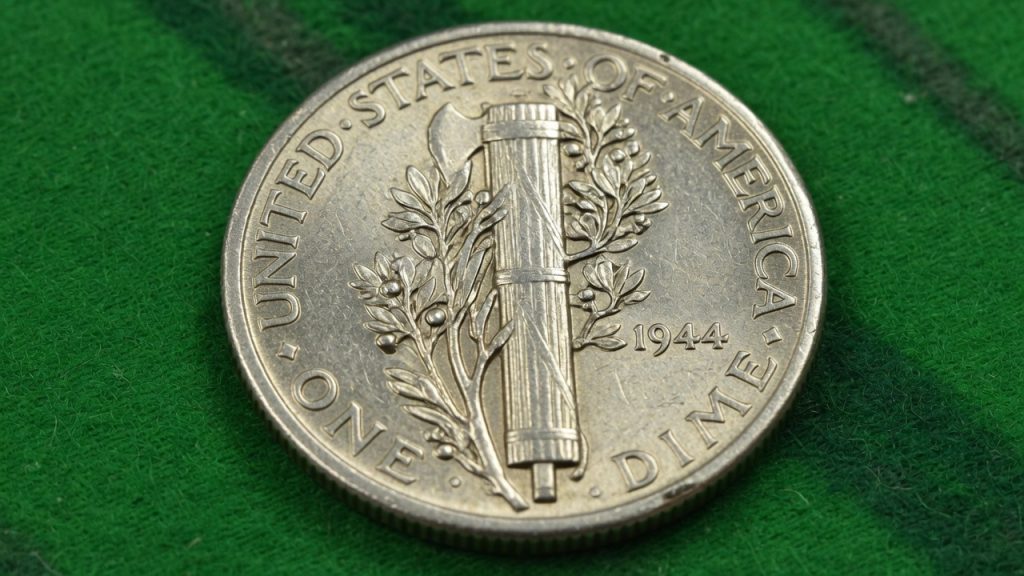
US coins are a pile of civic shorthand. Artists reused a small set of objects so a stranger could read the coin without a pamphlet.
Fasces
A fasces is a bundle of rods, sometimes with an axe. Roman magistrates carried it as a sign of authority. On the Mercury dime reverse (1916–1945) it sits with an olive branch. The dime is Winged Liberty, not the Roman god Mercury — the nickname stuck anyway.
Full split bands on that fasces are a strike-and-grade conversation on high-end Mercuries. On a worn dime the bands are just gone. That is wear, not a variety.
Olive and arrows
An olive branch is peace. Arrows are readiness for war. The heraldic eagle holds both. Early US gold and silver sometimes put the arrows in the stronger talon; later designs usually put olive in the right talon. Why coins have eagles. That is symbolism. It is not a wartime “secret switch” on your Walker.
Arrows at the date on some 1850s Seated coins mark a weight change. That one is a listed type. Seated Liberty. Open wreath, closed wreath, open 3.
Torch
A torch is enlightenment or liberty. You see it on Standing Liberty (the flag-like shield and olive are the pair), on the Roosevelt dime reverse, and on Saint-Gaudens walking with a torch and an olive branch.
What a shop does with this
We use symbols to identify the type. We do not pay extra because a Facebook group called the fasces a “hidden meaning.” Initials that are not codes. Error hype.
Continue in the coin and money library. Related visitor guides: for shop visitors.