
← Back to articles · Hobby & visiting shops ·
Flying Eagle cents: the short small-cent that came before the Indian
Flying Eagle cents were struck 1856–1858. They are copper-nickel, not gold and not bronze. 1857 and 1858 are the circulation dates. 1856 is the scarce pattern-turned-key. Then the Indian Head starts in 1859.
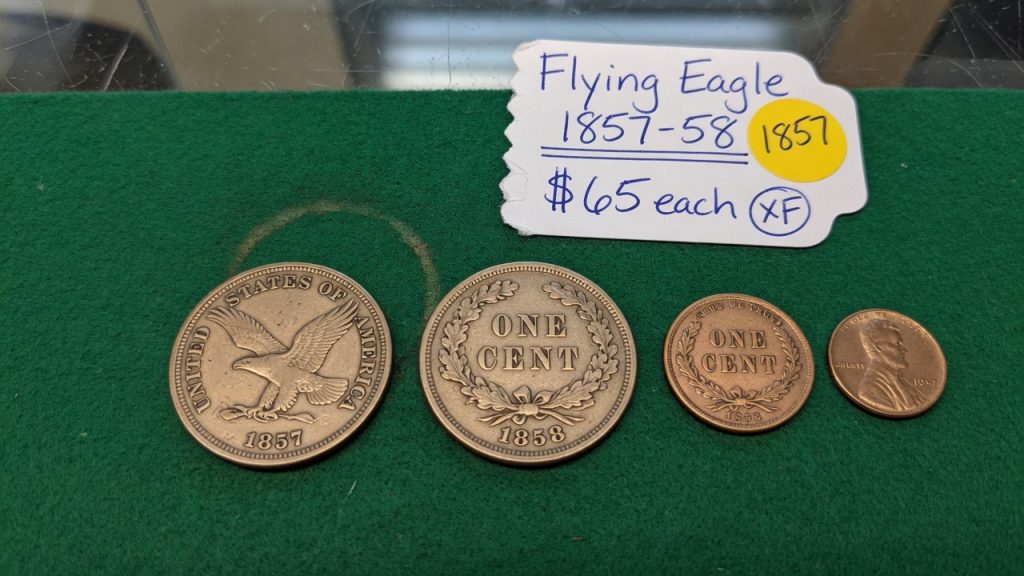
A Flying Eagle cent is the first small US cent, struck 1856, 1857, and 1858. James B. Longacre. Copper-nickel (88/12) — pale, thicker than a later bronze Indian. It replaced the large cent in 1857.
The eagle in flight is not a Gold Eagle. It is a one-cent piece.
Common vs the ones we pull
1857 and 1858 (large letters and small letters) are the circulation dates. Worn ones are type coins, not a 1909-S VDB. 1856 is the scarce one — a pattern that leaked into collecting. Fakes and altered 1858s exist. We look at the date style. How shops check authenticity.
Extra history
People hated hauling large cents. The Mint shrank the cent and used nickel to make it look “white.” 1859 swapped the eagle for Liberty in a headdress. Three years. That is the whole series.
What a shop pays
1857–58 worn: a modest type bid. 1856: we slow down. Holed or harshly cleaned: little. Don’t clean. Old is not rare.
People also ask
Is a Flying Eagle gold? No. Copper-nickel.
Did they make them in 1859? No. Indian Head starts 1859.
Is 1858 a key? It is a two-year type with a lettering variety. It is not an 1856.
Continue in the coin and money library. Related visitor guides: for shop visitors.
Flying Eagles feel thicker than a bronze Indian. That nickel alloy is the tell in the hand. A “gold Flying Eagle” is dirt, lacquer, or a novelty — not a gold dollar.
1858 large letters vs small letters is a variety talk, not a key-date talk. We still look if you have a pile of 1858s.
Same jar: large cents until 1857, Flying Eagle 1857–58, Indian 1859 on. Three sizes of “old penny,” three bids.