
← Back to articles · Hobby & visiting shops ·
Colonial American coins and money before the U.S. Mint
Wampum, foreign coin, Massachusetts silver, paper experiments — how money actually worked in the American colonies before Philadelphia struck federal coins.
Before the United States Mint opened, North American colonists still needed to price bread, pay wages, and settle debts. They did it with a messy toolkit: Native shell bead systems in some regions, book credit, commodity money, foreign silver and gold coins, a few local coinages, and repeated experiments with paper.
If you only know Lincoln cents and Federal Reserve notes, colonial money feels alien. It is the necessary prequel. Federal coinage did not appear in a vacuum; it tried to replace chaos with a national standard.
Foreign coin was everyday money
Spanish-American silver — especially the 8-reales “piece of eight” and its fractions — was the workhorse of much Atlantic trade. British coins appeared, as did other European issues, depending on port and decade. People cut coins, weighed coins, and argued about quality. A “dollar” idea already lived in the hemisphere through Spanish-American silver long before 1792.
Massachusetts silver and other colonial issues
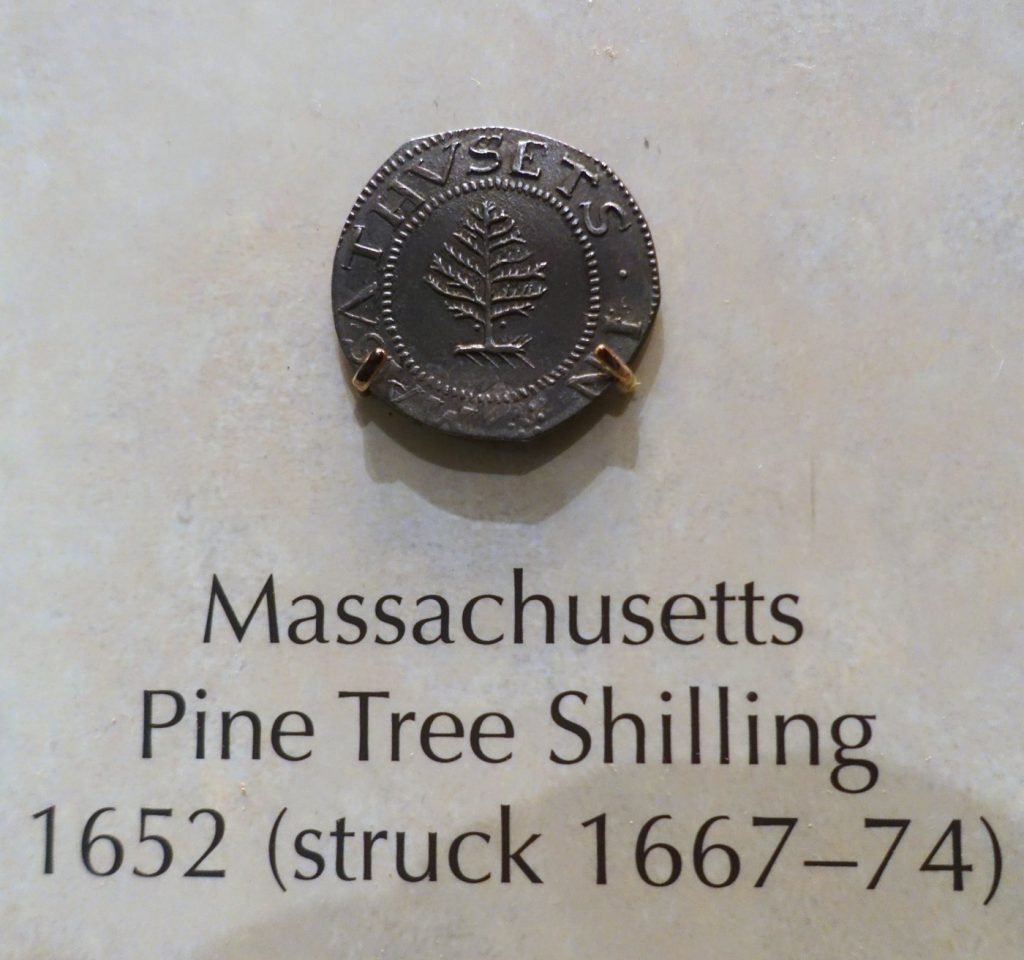
The Massachusetts Bay silver coinage (including the famous pine tree shillings and related oak/willow types in the broader story collectors know) is the headline early English-colonial silver. It asserted local capacity to coin in a world where London preferred control. Specimens are historic and usually expensive when real; forgeries and later fantasies exist in the wider market, so authentication matters.
Other colonies experimented with tokens, paper, and regulations more than full mints. The point for modern readers: “American money” started as improvisation under empire, not as a clean federal catalog.
Colonial and Continental paper
Colonial governments issued paper with uneven success. The Revolutionary era Continental Currency became a byword for depreciation — “not worth a Continental” entered the language because over-issue and weak backing hammered confidence. That trauma shaped later American suspicion of paper and love affairs with hard money rhetoric, even when policy later chose flexible paper systems.
Post-colonial transition
After independence and under the Constitution, the Coinage Act of 1792 and the Philadelphia Mint aimed to nationalize the unit of account. Foreign coins remained legal or practical in commerce for years afterward; habits die slowly. Early federal copper, silver, and gold had to earn trust against familiar Spanish milled dollars.
What collectors and heirs should remember
Colonial and early Confederation items are specialist fields. Do not clean. Do not assume a dark round disk in a drawer is a pine tree shilling. Photograph, research, and use experts for anything that might be significant. For most households building metal savings today, colonial romance is history class; modern bullion is the savings tool — different jobs.
Educational history and product guidance — not legal, tax, or investment advice. Laws and policies change; verify current rules for your situation. Images used for education are public-domain or freely licensed historical references where sourced from open repositories.